

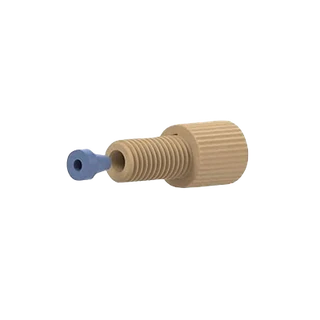
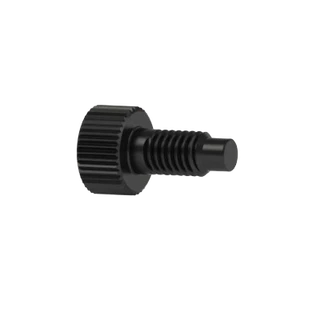
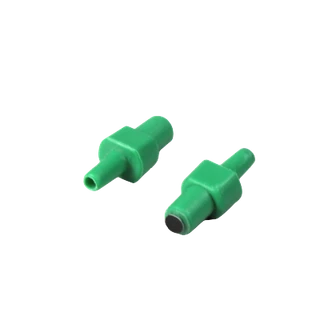
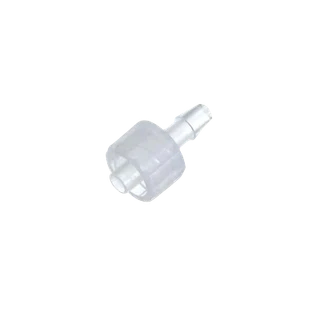
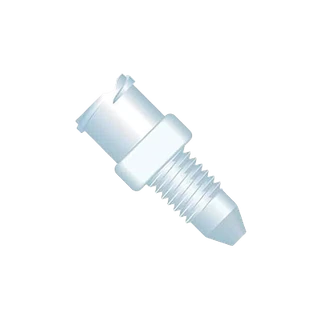
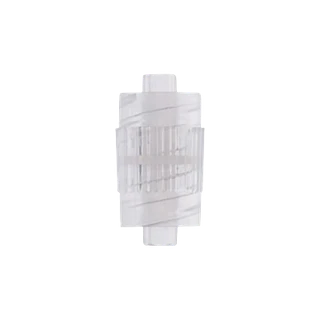
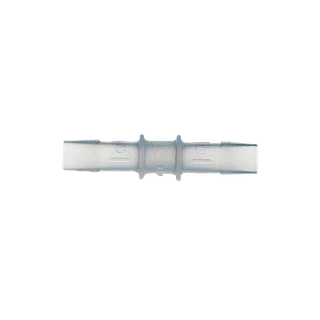
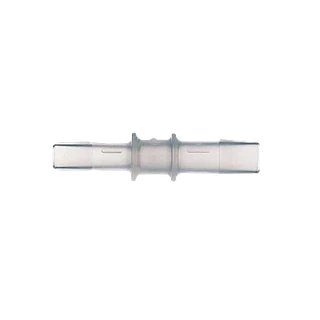
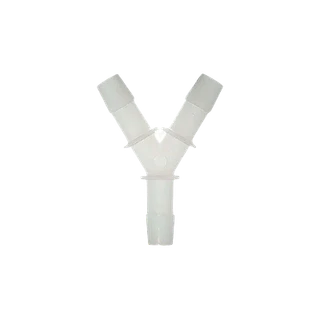
When selecting fittings and connectors for microfluidic applications, ensuring chemical compatibility is crucial to maintaining system integrity and performance. Polyoxymethylene, an acetal homopolymer commonly known as Delrin, is widely used for fittings and connectors due to its outstanding balance of properties that bridge the gap between metal and plastic. Delrin offers excellent mechanical properties, including low moisture absorption, high tensile strength, creep resistance, and durability. Its extreme chemical resistance to hydrocarbons, solvents, and natural chemicals makes it ideal for demanding environments.
However, like all materials, Delrin has its limitations, and not every chemical is compatible with it. Therefore, understanding compatibility is essential for preventing degradation and ensuring safety. In this guide, we present a comprehensive table of chemical compatibility for Delrin fittings and connectors. This table, based on chemical compatibility data provided by IDEX, is designed to help engineers, technicians, and researchers quickly determine whether Delrin is suitable for their specific applications, ensuring reliable and long-lasting performance in various chemical environments.
Refer to this table to make informed choices and maintain the efficiency and safety of your system.
💡 The chemical compatibility rating key is as follows:
- A = Little to No Effect
- B = Slight Effect (Minor Discoloration or Corrosion)
- C = Moderate to Severe Effect (Not Recommended)
🚨 The compatibility ratings provided in these tables are for general guidance only and may not be complete or accurate. They do not address potential contamination or changes in fluid properties due to tubing interaction. We do not guarantee the suitability of any material for specific purposes or the impact of tubing on fluid quality. For critical applications, conduct specific tests or seek expert advice.
Delrin Fittings and Connectors: Chemical Compatibility Table
| Chemical Substance | Compatibility | Notes |
|---|---|---|
| A | ||
| Acetic acid | C | |
| Acetone | A | Elevated temperatures reduce resistance. |
| Adipic acid, 5% | A | Room temperature only. |
| Aluminum sulfate, 5% | A | Room temperature only. |
| Ammonium chloride, 10% | A | Elevated temperatures reduce resistance. |
| Ammonium hydroxide, 10% | C | |
| Ammonium orthophosphate, 5% | A | Room temperature only. |
| Ammonium thioglycolate, 8% | A | Room temperature only. |
| Aniline | B | Elevated temperatures reduce resistance. |
| B | ||
| Benzene | A | Elevated temperatures reduce resistance. |
| Brake fluid | A | Room temperature only. |
| Brake fluid (Lockheed 21) | A | |
| Brake fluid (Super 9) | A | |
| Buffer pH 10 | A | Room temperature only. |
| Buffer pH 4 | A | Room temperature only. |
| Butyl carbitol | A | |
| Butylaldehyde | A | Elevated temperatures reduce resistance. |
| Butylamine | C | |
| C | ||
| Calcium chloride, 5% | A | Room temperature only. |
| Calcium chloride, 10% | A | |
| Carbon tetrachloride | A | Room temperature only. |
| Castor oil | A | Room temperature only. |
| Cellosolve acetate, 5% | A | Room temperature only. |
| Cellosolve, 5% | A | Room temperature only. |
| Chlorine >3ppm | C | |
| Cleaner (igepal), 1% | A | Room temperature only. |
| Cleaner (igepal), 25% | A | Room temperature only. |
| Copper chloride, 5% | A | Room temperature only. |
| D | ||
| Dimethyl formamide | A | |
| Dioxane | B | Elevated temperatures reduce resistance. |
| E | ||
| Ethanol | A | Room temperature only. |
| Ethyl acetate | A | Room temperature only. |
| Ethylene chloride | A | Room temperature only. |
| F | ||
| Ferric chloride, 5% | A | Room temperature only. |
| Ferrous chloride, 5% | A | Room temperature only. |
| Formaldehyde, 37% | A | Room temperature only. |
| Formic acid | C | |
| Fungicide (Captan), 5 gm/qt | A | Room temperature only. |
| G | ||
| Gasoline, high-test | A | Room temperature only. |
| Gasoline, regular | A | Room temperature only. |
| H | ||
| Hexane | A | |
| Hydrochloric acid, 10% | C | |
| Hydrogen peroxide, 1% | A | Room temperature only. |
| Hydrogen peroxide, 90% | C | |
| I | ||
| Insecticide (DDT), 2 tsp/qt | A | Room temperature only. |
| Insecticide (lead arsenate), 1 tsp/qt | A | Room temperature only. |
| Insecticide (Malathlon-organic phosphorus), 6 tsp/qt | A | Room temperature only. |
| Iso-octane | A | Room temperature only. |
| Isoamyl alcohol | A | |
| K | ||
| Kerosene | A | |
| L | ||
| Lestoll, .25 cup/gal | A | Room temperature only. |
| Liquid Drano, .25 cup/gal | A | Room temperature only. |
| Lithium chloride, 43% | A | |
| Lysol, .25 cup/gal | A | Room temperature only. |
| M | ||
| Methanol | A | |
| Methyethylketone (MEK) | A | |
| Methyl chloride | A | Room temperature only. |
| Methyl salicylate | A | Room temperature only. |
| Motor oil | A | Room temperature only. |
| N | ||
| Nicotine sulfate, 5% | A | Room temperature only. |
| Nitric acid, 10% | C | |
| O | ||
| Oil (Crankcase) | A | Room temperature only. |
| Oil, 10W30 | A | |
| P | ||
| Perchloroethylene | B | Elevated temperatures reduce resistance. |
| Phenol | C | |
| Phosphoric acid, 10% | C | |
| Potassium permanganate, 10% | A | |
| Pyridine | B | Elevated temperatures reduce resistance. |
| S | ||
| Sodium bisulfate, 5% | A | Room temperature only. |
| Sodium bisulfite, 5% | C | |
| Sodium bromate, 14% | A | Room temperature only. |
| Sodium bromide, 5% | A | Room temperature only. |
| Sodium chlorate, 5% | A | Room temperature only. |
| Sodium chloride, 10% | A | |
| Sodium hydroxide, 10% | C | |
| Sodium hypochlorite, 5% | C | |
| Sodium sulfide, 5% | A | Room temperature only. |
| Sodium sulfite, 5% | A | Room temperature only. |
| Sodium thiosulfate, 26% | A | Elevated temperatures reduce resistance. |
| Stannous chloride, 5% | C | |
| Sulfuric acid, 1% | C | |
| T | ||
| Tartaric acid, 5% | A | Room temperature only. |
| Tetrahydrofuran (THF) | A | |
| Toluene | A | Elevated temperatures reduce resistance. |
| Triethylamine | A | Elevated temperatures reduce resistance. |
| U | ||
| Urea, 5% | A | Room temperature only. |
| W | ||
| Weed killer (ammonium sulfamate-ammate), 2 cups/qt | A | Room temperature only. |
| Z | ||
| Zinc chloride | C |